Foramind
Mind Mapping Platform Interface Design
TECHNOLOGIES USED
PROJECT GALLERY
Problem: Technical Barriers and Accessibility
At its core, mind mapping is the process of turning scattered thoughts into structured visual diagrams. Yet the success of this process depends on the tool being accessible and free of complexity for students and professionals alike. Foramind needed an interface that would turn organizing ideas from a "technical and demanding task" into a feeling of "effortless and natural flow."
Solution & Approach
A research-driven process was carried out that placed real usage patterns at the heart of the design. Starting with comprehensive target-audience analysis and an evaluation of competing products (their strengths and weaknesses), design decisions were validated at an early stage. During the wireframe and prototype phases, feedback was collected directly from users through online school sessions and field/customer visits.
Key Features and Design Decisions
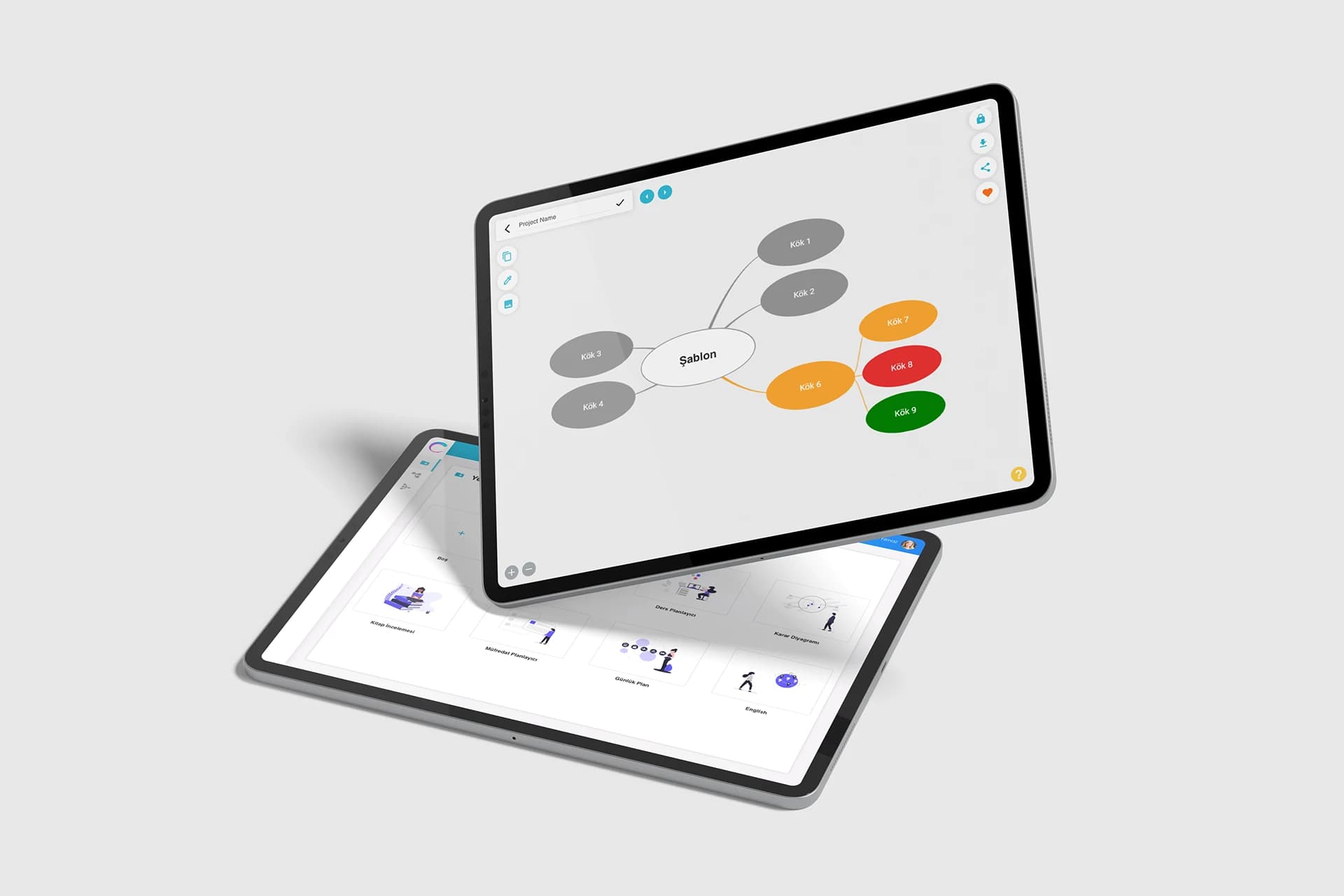
The interface was built around tools that turn mental processes into visual diagrams with minimum friction.
- Simplified Workspace: The design canvas was stripped of unnecessary visual clutter so users can focus solely on their ideas.
- Cross-Platform Consistency: Core actions and tools were made prominent, accessible, and consistent across both web and mobile interfaces.
- Scalable Readability: Structural integrity and a strong visual hierarchy were prioritized so mind maps stay comprehensible even as they grow and become more complex.
- Feedback-Driven Development: A tested and validated experience was created, shaped iteratively around the usage habits of its real audience of students and educators.
Outcome
Foramind gained a modern interface that lets users effortlessly visualize their ideas and knowledge in a digital environment. Shaped by direct feedback from its real users, this structure reinforced the platform's position as "Turkey's leading mind mapping platform" in terms of design and usability as well.