Bluepath Robotics
Autonomous Fleet Management System (AMR/AGV) Interface Design
TECHNOLOGIES USED
PROJECT GALLERY
Problem: Cognitive Load and Complexity
The existing industrial interfaces used for live map monitoring, task assignment, and vehicle status tracking were visually dense and fatiguing. In scenarios where many autonomous robots are controlled simultaneously, this complexity created a high cognitive load on operators, increasing the risk of error and slowing operational speed.
Solution & Approach
The core goal was to ease the data burden on the operator and to standardize complex industrial processes. A modern, user-centered interface strategy was devised — optimized for long monitoring sessions and designed to simplify the flow of data.
Key Features and Design Decisions
Throughout the process, a design language suited to industrial use was adopted — easy on the eyes and putting functionality first.
- Visual Hierarchy and Simplification: Visual noise on live map screens was deliberately reduced. Dashboard data was reorganized with a clean information architecture that makes real-time tracking easier.
- Real-Time Monitoring: The map, fleet traffic, live robot telemetry, and status notifications were structured to be grasped within seconds.
- Interaction and Feedback: The visibility of error messages, alerts, and interactive icons was increased so operators can act quickly in critical moments.
- Fluid User Experience: Task assignment and performance reporting flows were stripped of unnecessary steps.
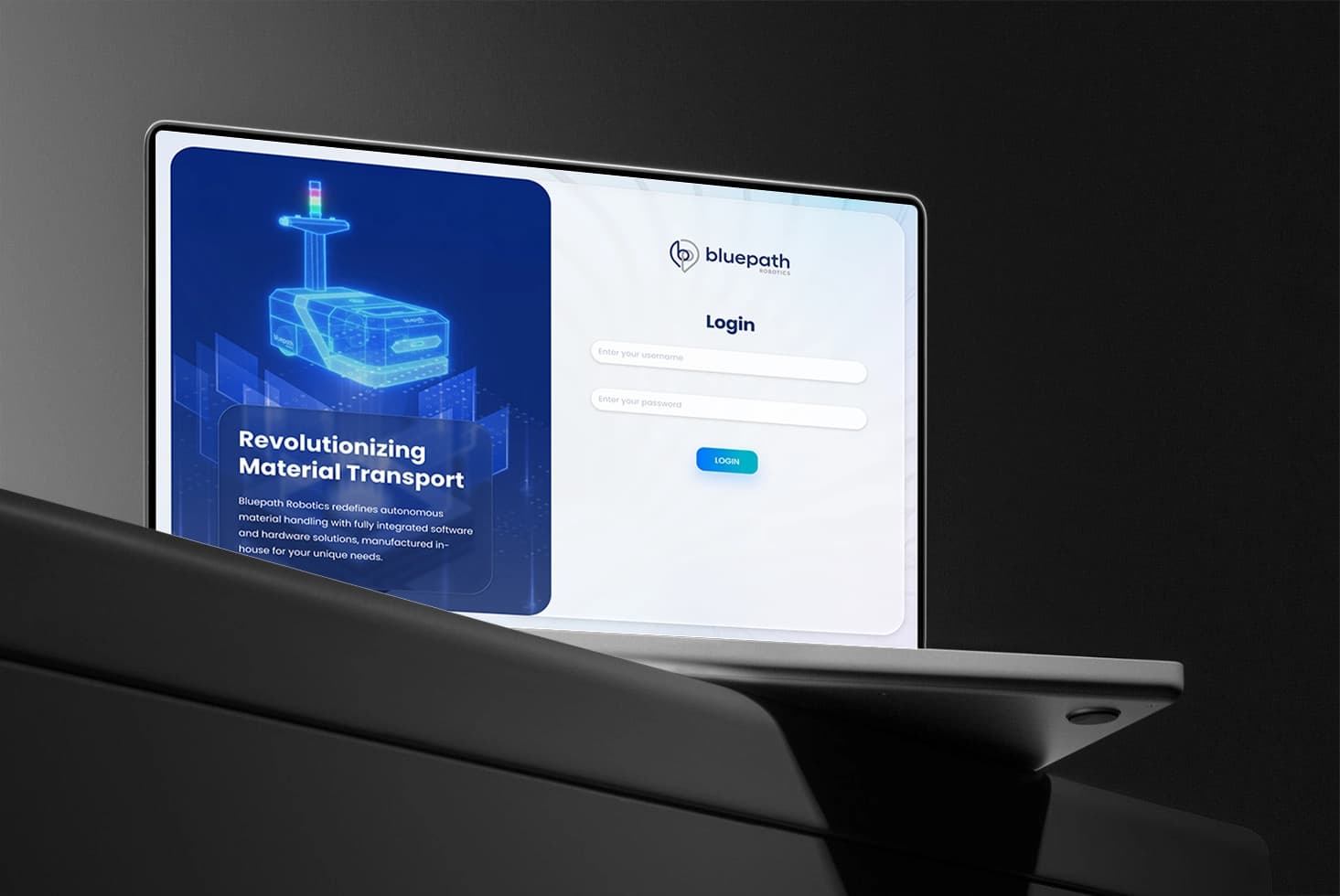
- Modern Interface: Going beyond industry standards, a highly readable and aesthetic structure was created, inspired by current "liquid glass" interface trends.
Outcome
Bluepath's central software became a seamless, end-to-end autonomous robot fleet management experience for factories and warehouses. The design minimized operator fatigue while bringing complex AMR/AGV operations to a traceable, fast, and safe standard.